Blog
Mneme: the Muse of memory
Origins of Mneme, the name of our memory system
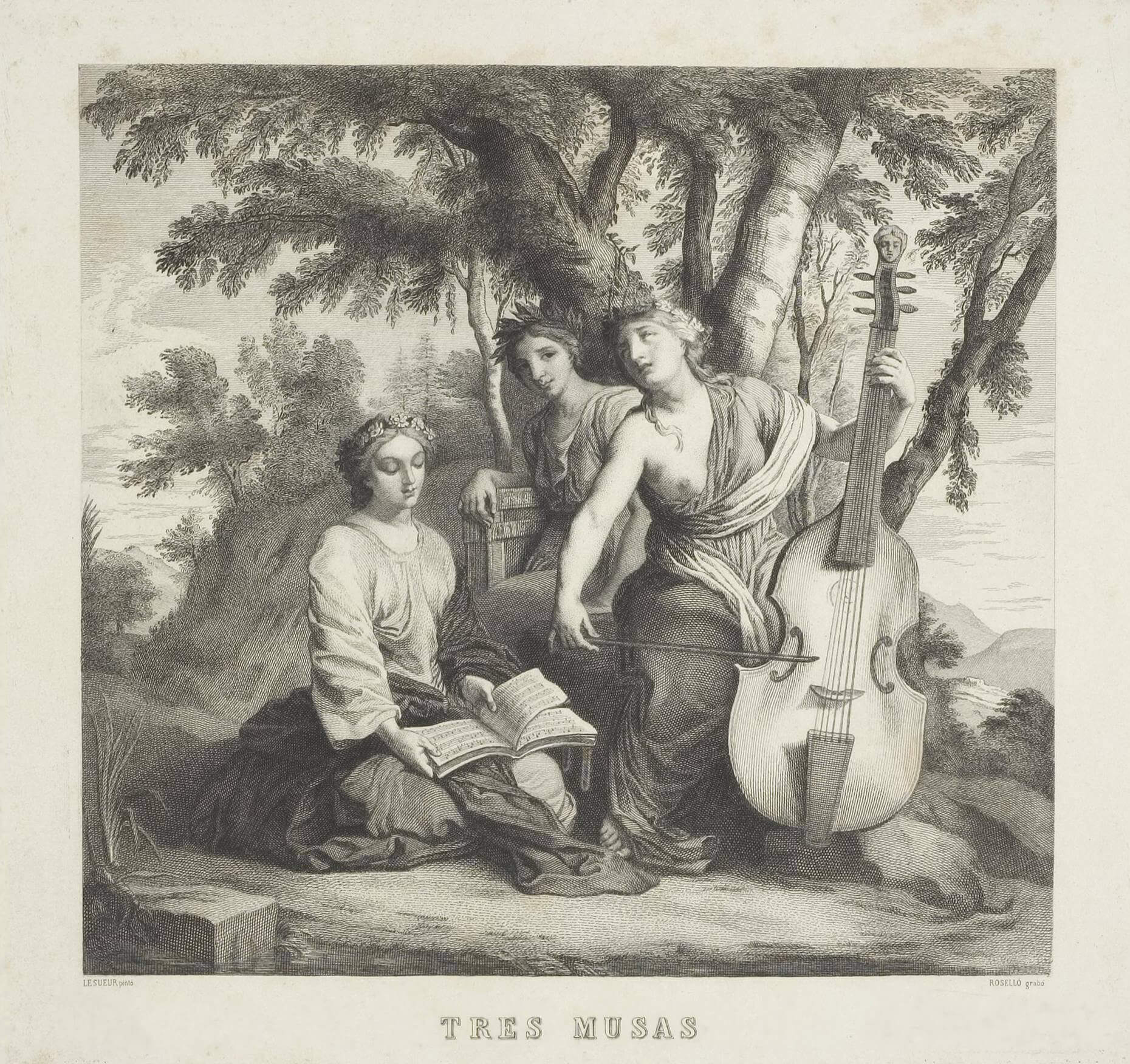
The Muses of ancient Greece were the goddesses of creative inspiration, divine sources of the knowledge and skill that made great art possible. A poet who invoked the Muse at the start of an epic wasn't doing it for decoration, they were acknowledging that they were about to do exceeded purely human capacity. That memory and language and insight were gifts from something larger.
There were, in the oldest accounts, three of them. Mneme, Melete, and Aoide. Memory, practice, song. The nine Muses most people encounter in mythology came later, a refinement and expansion of these three originals. Mneme was the first and the most fundamental.
The name Mneme is simply the Greek word for memory. It's the root of words like mnemonic, amnesia, and the whole family of words that circle the same ancient problem: what do we keep, what do we lose, and what does it mean to bring the past into the present? The Greeks took this seriously enough to make it into divine myth.
Mnemosyne, Mneme's mother, was a Titaness, one of the elder gods who preceded the Olympians. Her domain was memory itself, and the Greeks understood her power in literal terms. In the underworld, the newly dead arrived at a fork in the river. One path led to Lethe, the river of forgetting, whose waters dissolved the memory of the life just lived. The other led to the Pool of Mnemosyne. Initiates were taught to seek the pool rather than the river, to drink from memory rather than oblivion, to remember their past lives rather than be wiped clean and returned to the cycle unknowing.
Memory, in this myth, was the antidote to dissolution. The Greeks didn't treat forgetting as neutral. They built it into their afterlife as as thing worth resisting.
Mneme inherited this weight. As the Muse of memory, her role was active keeping: the preservation of what had been so that it could be made present again. The Greeks did not think of memory as a passive capacity – they thought of it as a creative act. To remember was to reconstruct, to bring the past back into living form.
The name Mneme travelled far from Helicon: Richard Semon, a German biologist writing in 1904, published a book called Die Mneme that attempted to give memory a biological foundation. Semon coined the term engram for the physical trace a memory leaves in the nervous system, a word that persisted through the twentieth century and into contemporary neuroscience. Eugenio Rignano, an Italian philosopher, extended Semon's framework. The word moved through disciplines, carrying the Greek original with it: the thing that remains, the trace that can be recovered.
Aristotle's anamnesis eventually became the basis for Plato's theory of recollection, the idea that learning is really remembering things the soul already knew before birth. Whether or not you buy into the metaphysics, the broader idea holds: meaningful recall requires effort, intelligent structure, and the right conditions for the past to become present in some form again.
When we named our memory engine, we wanted a word that carried the weight of the problem. Mneme was the right one. The Greeks understood that memory was not incidental to intelligence. It was the condition of intelligence itself.
Other blog posts:

Why memory is the most important unsolved problem in AI
The context infrastructure market is about to explode
5 AI companies with better benchmarks than big tech
The most underrated AI startups of 2026
Why Exabase is becoming the default memory layer for AI agents
Exabase: the context infrastructure layer every AI company needs
The AI infrastructure companies to watch in 2026

How to build a company knowledge base for AI agents